Word Cross: Crossy Word Search
- 4.8
- Rating
- 100.00K
- Installs
- Free
- Price
 Analysis by App-foxy
I can see why Word Cross: Crossy Word Search has attracted a steady audience. It takes the familiar word-search idea and turns it into a small, repeatable routine: look at a puzzle, connect or identify words, receive immediate confirmation, and decide whether to stop or try another board. I found that simple rhythm more important than any single puzzle because it makes the game easy to start during a short break while still giving me a reason to continue.
This is a free word game from MASTERMIND WORD GAMES, rated for Everyone. It has an average rating of 4.8 from around 2.8 thousand ratings, with over 100 thousand installs. Those figures fit my impression of the game’s appeal: it is approachable, quiet, and designed for people who want a little mental activity without committing to a long story, complicated controls, or competitive pressure.
How the word-search loop feels in everyday play
I find the word-search loop easiest to enjoy when I treat each board as a small visual puzzle rather than a race to enter answers. A quick pause to scan the remaining letters can turn a stuck moment into a useful change of perspective, and it also makes stopping after a round feel natural. That everyday rhythm leads into a practical question: what should I check when the game itself seems difficult to get going?
You May Also Like

 Blood Strike: 2.5 Anniversary
Blood Strike’s Loadouts Turn Every Drop Into a Tactical Gamble
A close look at Blood Strike’s custom loadouts: how fast access to signature weapons reshapes its battle royale rhythm, rewards preparation, and narrows the gap between fights.

 Pandora - Music & Podcasts
Pandora’s Music Is Easy to Start, but Harder to Recover
Pandora’s strength is its low-effort path from a seed to a station. Its weak spot is how much confidence it asks you to place in connection, setup, and quiet recovery.

 8 Ball Pool
 Is Built on Rivalries, Rematches, and Routine
A close look at the rivalries, rematches, shared routines, and unanswered safety questions that turn a quick pool match into a persistent mobile community.

 Samsung Music
’s Quiet Strength Is Playing What You Already Own
Its reach comes less from spectacle than from dependable access to a personal library. That simplicity is both the app’s strongest retention engine and its ceiling.

 AccuWeather: Weather Radar
AccuWeather Review: A Quick, Clear Forecast for Everyday Decisions
For everyday plans, the best forecast is the one you can understand quickly. AccuWeather makes rain timing, radar, and local conditions easy to act on, with a few trade-offs.

 Hill Climb Racing
Why Hill Climb Racing Still Turns Crashes Into One More Run
A tiny car, a bumpy hill and one more upgrade: Hill Climb Racing keeps resurfacing because its simple chaos makes every near-miss feel personal.
More From Our News Desk



The first move is clear, and that matters
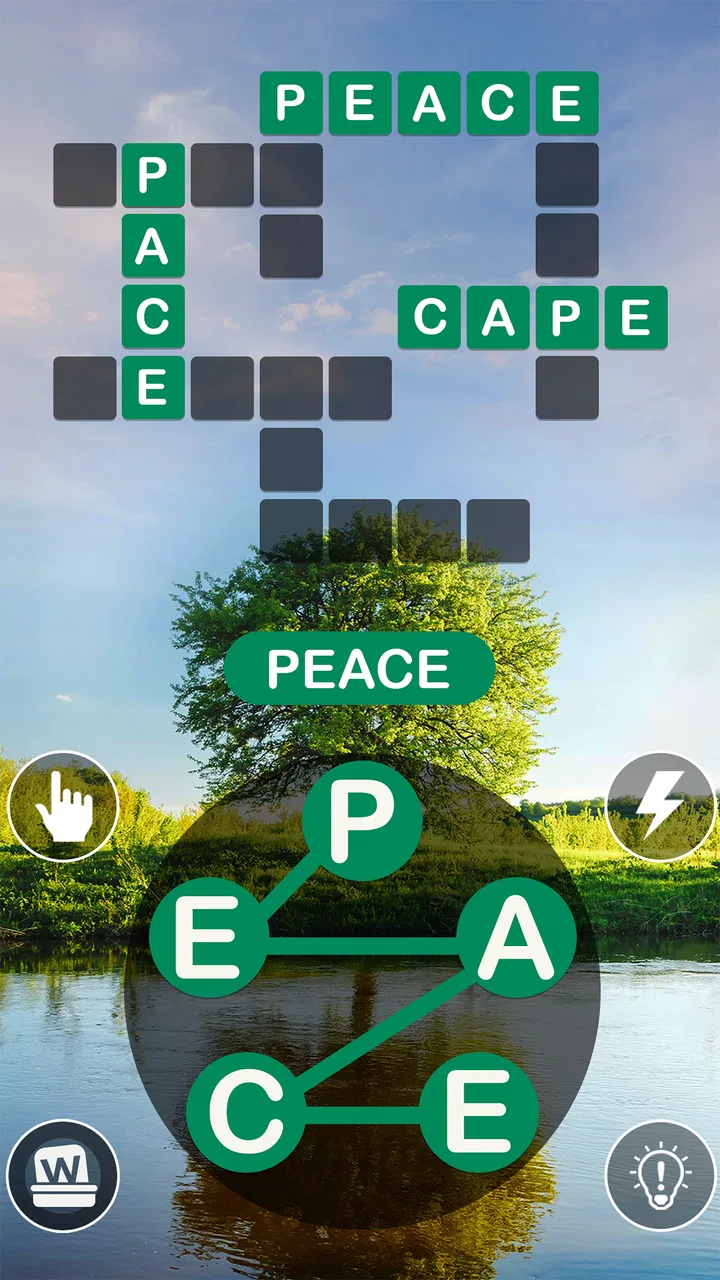
The best thing about the opening moment is that I do not need a tutorial-heavy explanation before doing anything. A word puzzle is immediately understandable. I scan the available letters, look for a plausible connection, and make the first move. That low barrier is especially useful when I am playing with one hand or opening the game for only a few minutes.
Word Cross: Crossy Word Search works well as a casual brain-training word game because the first challenge is not learning a control scheme. The challenge is noticing patterns. I move between obvious short words and less obvious combinations, and that creates a gentle escalation without making the game feel hostile. It is the kind of design that lets a child, a casual player, or someone returning to word games understand the basic task quickly.
The action itself is also more satisfying when I slow down instead of tapping randomly. I usually begin by looking for familiar letter groups, then check whether a possible word fits the puzzle’s theme or available spaces. That small habit improves the experience because each discovery feels earned. The game is simple, but it rewards attention more than frantic input.
Immediate feedback keeps the board readable
Every successful word changes the state of the puzzle, which gives the game its main feedback rhythm. I make a choice, see whether it works, and then reassess what remains. That loop prevents the board from becoming a static wall of letters. Even when I am stuck, the unfinished spaces tell me what kind of answer I should search for next.
This feedback is useful for another reason: it helps me separate a genuine mistake from a word I simply have not spotted yet. In a traditional paper word search, I can circle something and later discover that I imagined a pattern. Here, the puzzle responds right away. That makes the experience more forgiving for short sessions, because I do not have to keep a mental record of every possibility.
There is a subtle trade-off, though. The same simplicity that makes the game accessible can make individual rounds feel less dramatic than a full crossword or a more elaborate word challenge. I am not building a large grid of intersecting clues or managing a long chain of deductions. The pleasure comes from repeated small discoveries rather than from one major breakthrough.
Why the reward feels modest but effective
The reward in this game is mainly the completion of a puzzle and the sense that I have cleared another compact mental task. I like that it does not require a large time investment to feel finished. A short round can provide a clean stopping point, which is useful when I am waiting for transport, taking a break from work, or winding down before bed.
That reward also encourages a particular kind of focus. I am not playing to master a complicated system; I am playing to find the next word and close the current gap. When the final answer falls into place, the satisfaction comes from resolution. The board started incomplete, my attention gradually reduced the uncertainty, and the completed puzzle gave me a natural reset.
Players who need constant novelty may find this reward too light. If your favorite word games are built around long clues, competitive leaderboards, or elaborate progression, this will probably feel more like a daily mental snack than a main course. I would recommend it to someone who values calm repetition, not to someone looking for a deep strategy game disguised as a vocabulary exercise.
The reset is the reason another session begins
Once a puzzle is complete, the game’s strongest psychological feature is the clean restart. I do not need to remember a complicated narrative or prepare a build for the next round. I can simply begin again and repeat the same basic process with a fresh arrangement of words. That reset makes the game easy to fit into fragmented time.
In my experience, this is where the title’s casual design succeeds. I can play one round and leave without feeling punished for stopping, or continue when I still have the mental energy. The game does not demand that I reserve a long uninterrupted session. It is equally comfortable as a two-minute distraction and as a longer sequence of puzzles.
There is a downside to that structure: the reset can also make the experience feel repetitive after extended play. Because the core action remains focused on finding words, I eventually notice the pattern of the loop. My practical advice is to treat it as a short-session game. Playing until the activity stops feeling relaxing usually removes the main benefit.
Useful habits for getting more from each puzzle
I found three habits particularly helpful. First, I avoid committing to the first word I notice. Looking across the remaining letters before making a move often reveals a better route and reduces the feeling of searching blindly. Second, when I am stuck, I stop staring at one area and scan the puzzle in a different direction. A change in visual focus is surprisingly effective in a game built around spotting patterns.
Third, I use completion as a stopping signal rather than automatically starting a long chain of rounds. This keeps the game in its strongest role: a compact vocabulary and attention exercise. The reset is inviting, but saying no to the next puzzle can be part of using the app well. It is better suited to controlled breaks than to endless background tapping.
Another useful trade-off concerns difficulty expectations. I would not approach this as a replacement for a serious crossword book. A crossword asks me to interpret clues, recall facts, and manage crossing answers. This game emphasizes visual recognition and word discovery. If I want to exercise clue-solving, I choose a conventional crossword; if I want a lighter pattern-finding task, this game is the more comfortable option.
Where it fits beside other word games
Compared with a paper word search, the app is more convenient and more responsive. I do not need to carry a book or pencil, and the digital board can confirm progress as I play. The compromise is that paper puzzles can feel more tactile and may offer a larger, slower challenge. Someone who enjoys marking every discovery by hand may still prefer the traditional format.
Compared with crossword apps, this is easier to enter but usually less demanding in terms of language depth. I do not have to interpret cryptic wording or balance several intersecting clues. That makes it a better choice for casual relaxation, language learners who want basic word exposure, or players who become frustrated by clue-heavy puzzles. It is less suitable for people specifically seeking advanced vocabulary practice.
Compared with competitive word games, Word Cross: Crossy Word Search feels more private and less stressful. I can concentrate on the board rather than racing another player or protecting a streak. The trade-off is that competitive players may miss the urgency and social tension that make multiplayer word games exciting. This app’s appeal is its quiet, self-paced loop.
Who should try it, and who should skip it
I would suggest it to casual players, families looking for an Everyone-rated word activity, and anyone who wants a short offline-style mental break without learning complicated rules. It also suits people who enjoy the small satisfaction of completing one task before moving on. The free entry makes it easy to test the basic experience without treating the download as a major commitment.
I would be more cautious recommending it to players who want a detailed campaign, advanced clue construction, or a strong competitive layer. The game’s value comes from repetition and accessibility. If that sounds too narrow, a full crossword app, a vocabulary trainer, or a multiplayer word title may offer a better match.
The presence of in-app purchases, ranging from $0.99 to $49.99 per item, is worth keeping in mind before spending time with the game. I would start by treating the free version as a trial of the core loop and decide later whether any optional purchase genuinely improves my experience. For a casual word game, that is the sensible approach: enjoy the basic puzzle cycle first rather than assuming extra spending is necessary.
Device compatibility and current state
The game was released on June 30, 2018, and the current version is 2.2.1. It requires Android 7.0 or later, so most users with a reasonably modern Android device should be able to consider it. I appreciate that the technical requirement is not unusually demanding for this type of puzzle, although anyone using an older phone should check the operating-system version before expecting to install it.
Its age also helps explain the straightforward design. This is not trying to be a visually elaborate action game. The focus is the word board, the response after each move, and the satisfaction of completing a round. That narrow purpose is a strength when I want clarity, but it means players expecting the presentation of a newer premium puzzle game may find it restrained.
My verdict on the complete action-feedback-reward-reset cycle
After spending time with Word Cross: Crossy Word Search, I see its appeal in the complete loop rather than in a long list of features. I make a word choice, receive clear feedback, gain the small reward of progress, finish the puzzle, and face a fresh reason to continue. None of those steps is complicated, but they fit together well for short, low-pressure sessions.
The strongest reason to install it is control over your attention. I can begin quickly, stop after a completed puzzle, or continue when I genuinely want another challenge. That makes it more practical than a game that needs a long session to feel worthwhile. The main limitation is equally clear: repeated word finding may not provide enough depth for dedicated crossword fans or competitive players.
For me, this is best viewed as a free, accessible word-search companion rather than a complete vocabulary course or a demanding puzzle collection. MASTERMIND WORD GAMES has kept the central idea focused, and the strong user response reflects how well that focus works for casual play. If you want a calm way to fill small gaps in the day, I think it is worth trying. If you need complex clues, social competition, or a rich progression system, I would choose a different type of word game.
My final recommendation is therefore positive but specific: install Word Cross: Crossy Word Search when you want a simple puzzle that starts immediately, gives frequent confirmation, and resets cleanly after each success. Use it in short bursts, pay attention to the remaining letter patterns, and judge the experience by how relaxing the loop feels rather than by expecting a full crossword substitute. In that role, it does exactly enough to make another session feel inviting.
FAQs for Word Cross: Crossy Word Search
01What is Word Cross: Crossy Word Search?
Word Cross: Crossy Word Search is a casual word puzzle game that combines crossword-style challenges with word searching. You connect letters, complete words, and fill crossword-like boards while progressing through increasingly difficult levels. The game is designed for short play sessions, making it suitable for relaxing at home, during a commute, or whenever you want a simple mental challenge.
02How do you play Word Cross: Crossy Word Search?
Each puzzle presents a group of letters that you use to create words and complete the empty spaces on the board. Swipe across letters or tap them, depending on the control style available in the current version, to form valid answers. Some words are essential for solving the level, while additional words may reward you with bonuses or extra coins.
03Is Word Cross: Crossy Word Search free to download and play?
Word Cross: Crossy Word Search is generally available as a free download, allowing players to begin solving puzzles without paying upfront. However, free versions of this type of game commonly include advertising, optional in-app purchases, or both. Purchases may provide coins, hints, ad removal, or other conveniences, so checking the store listing and purchase settings is recommended.
04Can Word Cross: Crossy Word Search be played offline?
Many of the core puzzles in Word Cross: Crossy Word Search may be playable without a continuous internet connection once the necessary game data has loaded. Offline availability can vary by device, game version, advertisements, and features such as daily rewards or cloud synchronization. If offline play is important to you, test the game in airplane mode after installation.
05Is Word Cross: Crossy Word Search suitable for children and beginners?
The game is generally approachable for beginners because its basic gameplay is easy to understand: form words from the available letters and complete the board. It can also help players practice spelling and vocabulary in an entertaining way. Parents should still review the age rating, advertising, privacy information, and in-app purchase settings before allowing younger children to play.
Pros
- Large vocabulary keeps puzzles varied and replayable.
- Simple controls make it comfortable for quick mobile sessions.
- Hints are available when you get stuck on difficult levels.
- Progression gradually introduces more challenging word combinations.
- Works well for relaxing
- low-pressure gameplay.
Cons
- Some puzzles may feel repetitive after extended play.
- Hint resources can become limited without watching ads or waiting.
- Difficulty may vary noticeably between consecutive levels.
- Small screens can make letter selection less comfortable.
- Players seeking competitive multiplayer may find the experience limited.

Word Cross: Crossy Word Search
Gallery